

A Guide to Utah’s 2027 Legislative Session
Utah’s 2027 General Session runs for 45 calendar days, from Tuesday, January 19, to Friday, March 5, 2027. During those six and a half weeks, 104 part-time lawmakers will debate hundreds of bills and build the state budget.
For people in recovery, family members, peer support specialists, and allies, those 45 days directly shape whether Utahns can access the care they need. You do not need to master the entire legislative process before you speak up. Knowing what is at stake is the best place to start.
Key Behavioral Health Issues to Watch in 2027
While hundreds of bills will be introduced, five major behavioral health conversations are poised to take center stage this session.
1. Protecting Medicaid Funding and Coverage
Medicaid is the backbone of behavioral health and substance use disorder care in Utah. Heading into 2027, the program faces pressure on two fronts: a documented state Medicaid budget overrun of more than $150 million, alongside new federal changes taking effect on January 1, 2027, including more frequent six-month eligibility renewals and shorter retroactive coverage windows.
One of the most important lessons in Utah advocacy is that a bill and its money travel on two separate tracks. Even if a good policy bill passes, it can fail in real life if the funding does not follow. Most Medicaid and behavioral health budget decisions flow through the Social Services Appropriations Subcommittee, making it a critical room to watch this winter.
2. Coercive Treatment Models vs. Voluntary Care
Proposals that expand involuntary or coercive treatment for people with substance use disorders and mental health conditions continue to draw attention in Utah. Lawmakers and state leaders are actively debating large-scale “treatment-first” behavioral health campuses that condition housing on sobriety or treatment participation.
When these proposals come up, lived experience is the most powerful voice in the room. Lawmakers need to hear directly from Utahns about constitutional due process and what actually helps people sustain recovery: accessible, voluntary, peer-driven care rather than coercion.
3. How Utah Spends Opioid Settlement Funds
Utah is set to receive an estimated $611 million in opioid settlement dollars over 22 years, split evenly between the state and participating counties. Because the Legislature recently converted the state’s share into a permanent fund, lawmakers will only appropriate the investment earnings each year, estimated at around $3 million to $3.25 million for the upcoming session, while also deciding whether to renew three-year programs that are set to expire.
With limited annual dollars and competing priorities ranging from law enforcement interdiction to treatment and recovery community centers, advocates will be watching closely to ensure settlement funds stay focused on proven treatment, harm reduction, and long-term recovery supports.
4. Expanding Crisis Response and Rural Access
Utah has invested heavily in its crisis response system, and several funding and policy gaps remain on the table for 2027. Expect discussions around ongoing operational funding to open newly built rural behavioral health receiving centers in communities like Ephraim and Vernal, adding Mobile Crisis Outreach Team (MCOT) capacity in fast-growing areas like Utah County, and standardizing how 911 dispatchers transfer behavioral health calls to the 988 Suicide & Crisis Lifeline. Lawmakers are also considering standardized substance use disorder training for all law enforcement, fire, and EMS personnel to help first responders connect people in crisis to care.
5. Supportive Housing and Safe Transitions
Leaving a hospital, crisis center, treatment program, or county jail without a stable place to live puts recovery at immediate risk. In 2027, lawmakers are expected to weigh funding requests for county supportive housing infrastructure and wrap-around services designed to help people stabilize after discharge and avoid cycling back through emergency rooms or jails.
Ready to Get Involved? Attend Our Upcoming Events
If you want to learn how bills move, how to read a fiscal note, or how to prepare for a committee hearing or meeting with your legislator, Friends of Recovery Utah has you covered:
Friends of Recovery Utah Action Briefing
Join Friends of Recovery Utah for our monthly Action Briefing. This interactive roundtable provides a clear look at the behavioral health policies shaping our state. Each month, we…
Friends of Recovery Utah Action Briefing
Join Friends of Recovery Utah for our monthly Action Briefing. This interactive roundtable provides a clear look at the behavioral health policies shaping our state. Each month, we…
2027 Advocacy Training
Your voice matters at the Utah State Capitol, and this training will help you use it with confidence. Join USARA, NAMI Utah, and Friends of Recovery Utah for…

2027 Recovery on the Hill Day
This is where the training turns into action. Join us at the Utah State Capitol on Thursday, February 11, 2027, to meet face-to-face with your legislators and share…

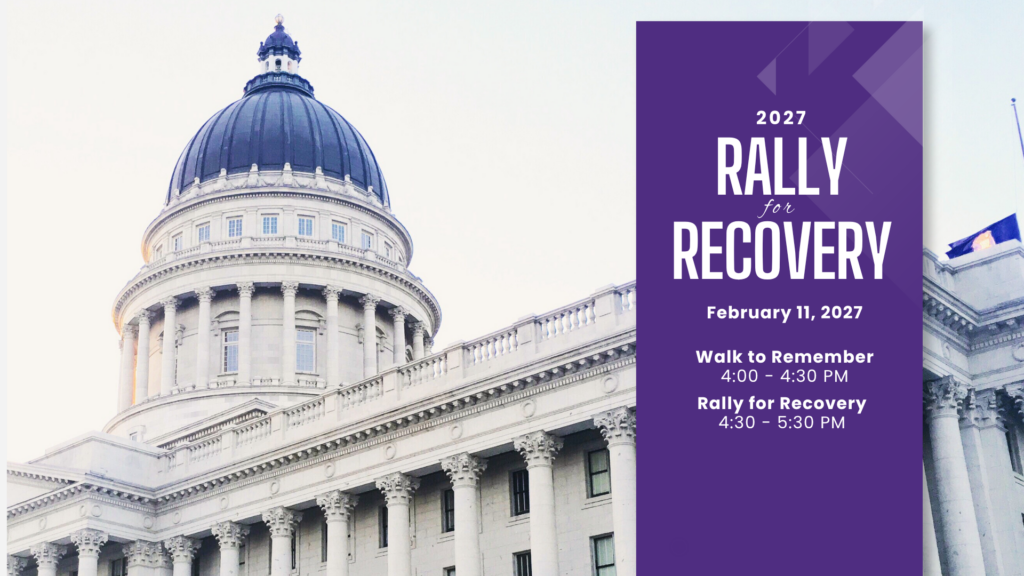
2027 Rally for Recovery
Please join FOR Utah, USARA, NAMI Utah, and Utah’s recovery community for our 2027 Rally for Recovery at the Utah State Capitol on Thursday, February 11! The event…
Policies about recovery and behavioral health should never be written without the people most affected at the table. Attend our briefings, take the advocacy course, and join us in making recovery a priority during the 2027 session.


